
Sources for Palmdale Previous Residents
A Palmdale previous residents search needs an era plan. The recorder is the longest ownership source, but its index is office-only and arranged by party name and recording year. Directory volumes show listed subscribers in selected years. The federal census is public through 1950. Newspapers begin in 1915 at the local library. Permits, maps, and probate fill particular gaps.
| Source | Years it covers | Where held | What it shows |
|---|---|---|---|
| Recorder index and books | 1851-present viewing guidance | LA County RR/CC, Norwalk | Recorded owners, liens, maps, transfer dates, legal descriptions |
| Palmdale telephone directories | 1958-59, 1960-61, 1962-63 | Library of Congress | Listed subscriber, address, phone, and business headings |
| Address and phone volumes | 1992, 1994, 2001-07 | LA County Library Californiana | Later listed subscribers and public businesses |
| Federal census | Through 1950 presently public | NARA and partner access | Occupants, relationships, age, birthplace, listed occupation |
| Local newspapers | 1915 onward, per policy | Palmdale City Library | Obituaries, notices, sales, clubs, addresses, legal events |
| Sanborn map | 1918 | Library of Congress | Early building footprint and use, not a resident list |
| City permits | Current systems; historic cutoff unknown | Palmdale departments or CPRA | Construction, alteration, applicant, contractor, dates |
Start with the era that matters. A family-history question may begin with the library. An ownership question begins with the current parcel and recorder. A prior household question usually needs both.
Begin With a Palmdale Address for Past Residents
Before tracing previous residents, establish the present parcel. Search the address in the Los Angeles County Assessor Portal. Capture the AIN, standardized situs, legal description, building facts, parcel map reference, assessment history, and any event document number. Then compare the place in Mapping Palmdale to confirm the parcel geometry and city boundary.
The AIN is a stable research handle, but it is not necessarily unchanged across time. Parcel splits and mergers can create new numbers. A legal description, tract map, lot and block, and old street label can carry the chain across an AIN change. Preserve the full description rather than relying on a current street address.
- AIN
- Assessor Identification Number, the county key for a parcel.
- Legal description
- Land language that identifies the parcel independent of postal numbering.
- Chain of title
- The linked sequence of recorded transfers and interests that explains ownership over time.
- Grantor
- The party conveying or releasing an interest in a recorded instrument.
- Grantee
- The party receiving or benefiting from the recorded instrument.
For current street work, the Palmdale street directory owns the parcel-by-parcel method. Previous residents require the next step: turning that parcel into a name-and-year deed search.
Walk the Palmdale Deed Chain for Past Residents
Los Angeles County RR/CC indexes real-property records by grantor, grantee, and recording year. It cannot search by situs address online. The current deed or an authorized roll source supplies a name and document clue. Search that current grantee's acquisition, then take the seller's name backward into earlier years. At every link, compare legal description, parcel predecessor, document type, and recording date.
- Record today's AIN, situs, legal description, and any current event document number.
- Identify the relevant current deed party and approximate recording year.
- Search the RR/CC grantor and grantee indexes in Norwalk, or submit a narrow mail request for the stated years.
- Read the prior instrument's grantor, grantee, date, document number or book/page, and legal description.
- Repeat with the earlier grantee until the target era, then bridge the owners to occupants with directories, census, papers, or probate.
The recorder's physical access split is concrete: 1851-1957 on the lower level and 1958-present on the second floor. The mail route is Registrar-Recorder/County Clerk, P.O. Box 1130, Norwalk, CA 90651-1130. Full images require a copy request, and the current fee schedule controls.
The RR/CC mail request page explains the names, document type, and years needed. It is the fallback when a Norwalk visit is not practical.
Palmdale Recorder Eras in a Past-Resident Search
The floor split can shape a previous residents research plan. Batch 1851-1957 records together, then work 1958-present on the second floor. The county's real-estate record history reaches back to 1850 or 1851, far earlier than Palmdale's incorporation. “Digitized” or modern recording does not mean a public Internet index exists.
RR/CC warns that deed indexes cannot be searched by address and that telephone index searches are not accepted. Give staff or a mail request the names and years produced by the parcel step. A tight range is more useful than a broad question about everyone who ever lived at a street.
Keep the index result separate from the purchased image. The index can point to a document number or book and page. The full instrument may show legal description, return address, transfer-tax notation, and parties, with redactions where required.
Bridge Palmdale Owners to Past Residents
A deed names a recorded party. It does not list every resident. To identify past households, pair ownership with a directory or census close to the transfer date. The verified Palmdale city directory years are 1958-63, 1992/94, and 2001-07. The census is public through 1950. Local newspapers run from 1915 and can supply address changes, obituaries, marriages, and sale notices.
Process flow: parcel and legal description → deed party → recording year → directory or census address → newspaper or probate confirmation. A missing directory entry can mean an unlisted subscription, a move, or a gap in the edition. An owner who receives mail elsewhere may be an absentee owner, but mailing data is not occupancy proof.
Use the source that matches the role. Telephone subscriber, census occupant, deed owner, voter, business agent, and actual occupant should remain distinct labels in the notes.
Palmdale Address History for Past Residents
Palmdale's record geography changed as the settlement grew. A timeline helps explain why the same land may appear under different names or custodians.
| 1850-51 | Los Angeles County real-estate records begin in the recorder's stated historical range. |
|---|---|
| 1886 | Palmenthal was founded by Swiss and German settlers, giving early catalog searches a place-name variant. |
| 1899 | Residents were using “Palmdale” alongside earlier railroad and post-office names. |
| 1915 | Palmdale newspaper coverage begins in the library policy's stated run. |
| 1918 | Sanborn sheet shows early building footprints in the compact settlement. |
| 1958-63 | Verified Library of Congress telephone-directory runs provide subscriber snapshots. |
| 1962 | Palmdale incorporated at 2.1 square miles, beginning a much larger municipal growth story. |
| 1992-2007 | Later address, phone, Antelope Valley Directory, and Yellow Pages runs appear in the Californiana inventory. |
The timeline is a research order, not a claim that one source covers every year. Gaps are expected and should be filled with the nearest reliable record.
Palmdale's 1918 Sanborn Clue for Past Residents
The 1918 Sanborn fire-insurance map predates incorporation by 44 years. It shows building footprints and uses in the early compact settlement, not the people who lived in every building. Its absence of a modern street address is expected because today's 106-square-mile city was not yet the same municipal footprint.
The Library of Congress Sanborn sheet can be paired with a 1915 newspaper notice, a deed legal description, a church or cemetery clue, and a later telephone volume. The map can locate a structure while the paper supplies names and uses.
When a parcel falls outside the sheet, move to plats, permits, deeds, and historic maps. Do not treat the map's coverage boundary as a statement that no building or resident existed elsewhere.
The RR/CC mail-request instructions are the source for this Palmdale previous residents image.
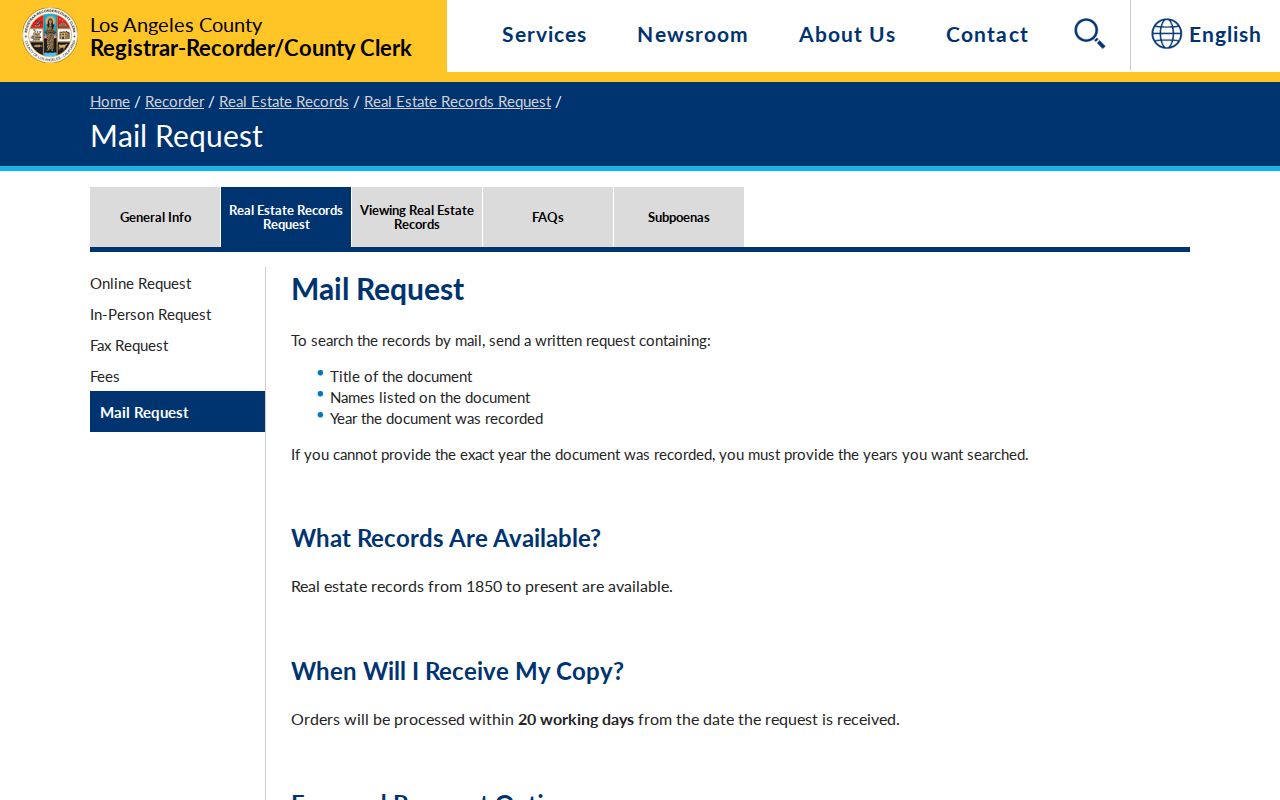
The recorder request view reinforces the need for grantor, grantee, document type, and year when an address cannot be searched directly.
Palmdale Newspapers and Probate Close Trails
An obituary can identify survivors, former places, and a date. A probate petition can name the personal representative and heirs. A deed or personal-representative deed can bring the estate back to the parcel. That sequence is especially useful when a former resident died before a later transfer.
Search the Palmdale Post, South Antelope Valley Press, and Antelope Valley Press around the deed year, death date, marriage, or sale notice. Include variant spellings and old names. The paper is an event source, not a certified vital record, and probate access depends on the court file.
Utility customer records are not a substitute. They are generally privacy restricted. A responsible previous residents trail ends at the public source that can be verified.
Palmdale Annexation and Address Continuity
The biggest continuity trap is geography. Palmdale incorporated at 2.1 square miles in 1962 and later grew to roughly 106 square miles. An older land, permit, or civic file may be a county record even when the parcel is now inside the city. County pockets, tract creation, Avenue letters, numbered East and West streets, and alternate route names can all change the catalog label.
Bridge an old address with a legal description, subdivision map, tract, rail or highway landmark, historic place name, and parcel predecessor. Try Palmenthal, Harold, Alpine Station, and Trejo Post Office in newspaper, map, and library searches. A vanished modern address is not necessarily a vanished place.
Research tip. Save the old wording exactly, then add the modern street and AIN in a separate field. That keeps a name change from erasing the earlier record.
Past Palmdale Households in Directories
The Palmdale city directory collection is the historical shelf, while this previous residents search owns the address trail. Use the 1958-63 books, 1992/94 volumes, and 2001-07 Antelope Valley editions as checkpoints. Search the surname, then inspect the same street or reverse section if that edition contains one. Record every initial, phone, and address change.
- Choose the nearest verified directory year.
- Copy the entry and its page reference, without expanding abbreviations from memory.
- Compare the next available edition and a census or newspaper source.
- Test the name against the deed party and legal description.
- Mark the result as listed subscriber, occupant, owner, or event witness rather than simply “resident.”
National Archives census research guidance explains the 72-year rule and public 1950 schedule. The census can add household relationships and birthplace. A directory can add a nearer address. Neither alone proves continuous residence.
The National Archives census guidance is the source for this Palmdale previous residents image.
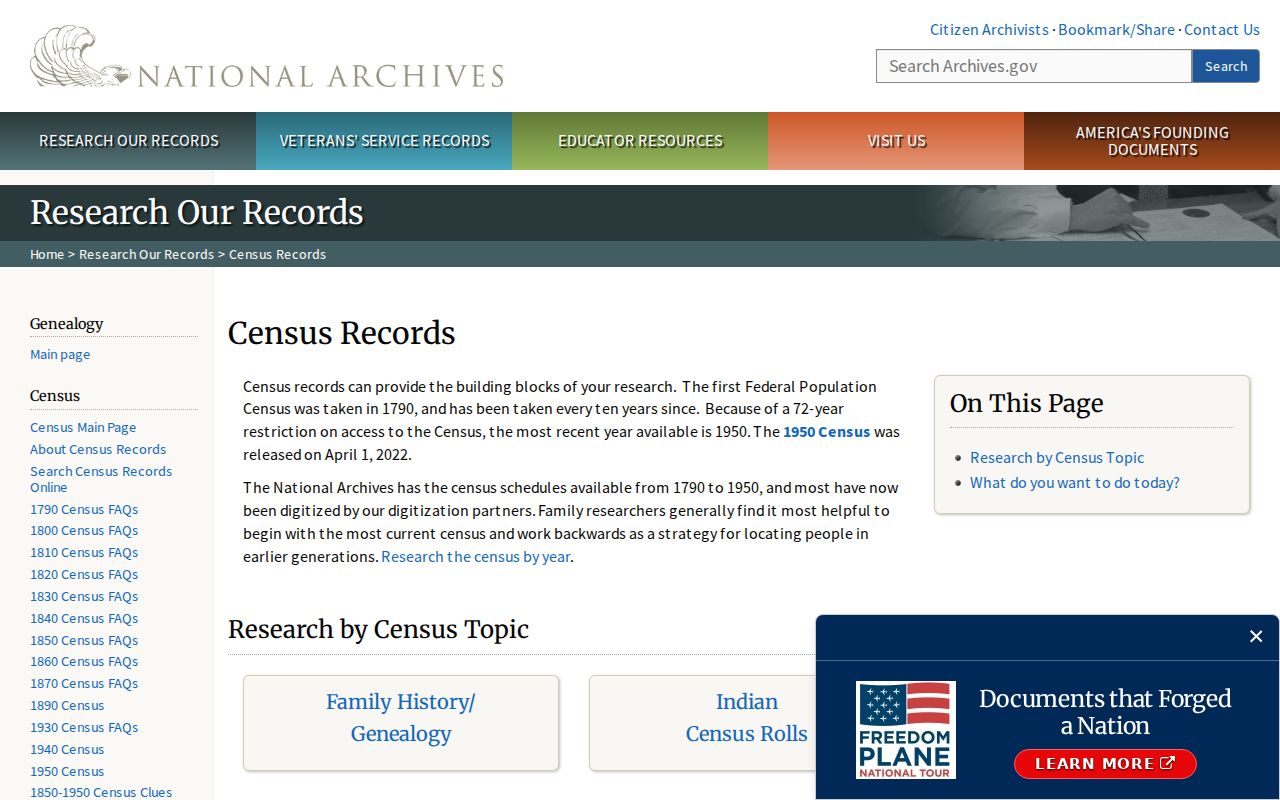
The census release rule sets the public cutoff, while a directory or newspaper can bridge the years that remain closed.
Limits on Palmdale Previous Residents
A former occupant may never appear in a public directory. Unlisted subscribers, mobile-only households, children, protected residents, renters, and private association members can remain outside the trail. Safe at Home can substitute an address and restrict voter or property-document exposure. Sealed probate, adoption, juvenile, and court material can also end the search.
Lawful house history. Use a Palmdale previous residents trail for family history, property history, and lawful personal research. Do not use names or old addresses to stalk, harass, threaten, or harm anyone.
When the record stops, preserve the last verified fact and name the gap. A careful unknown is part of an accurate address history.